
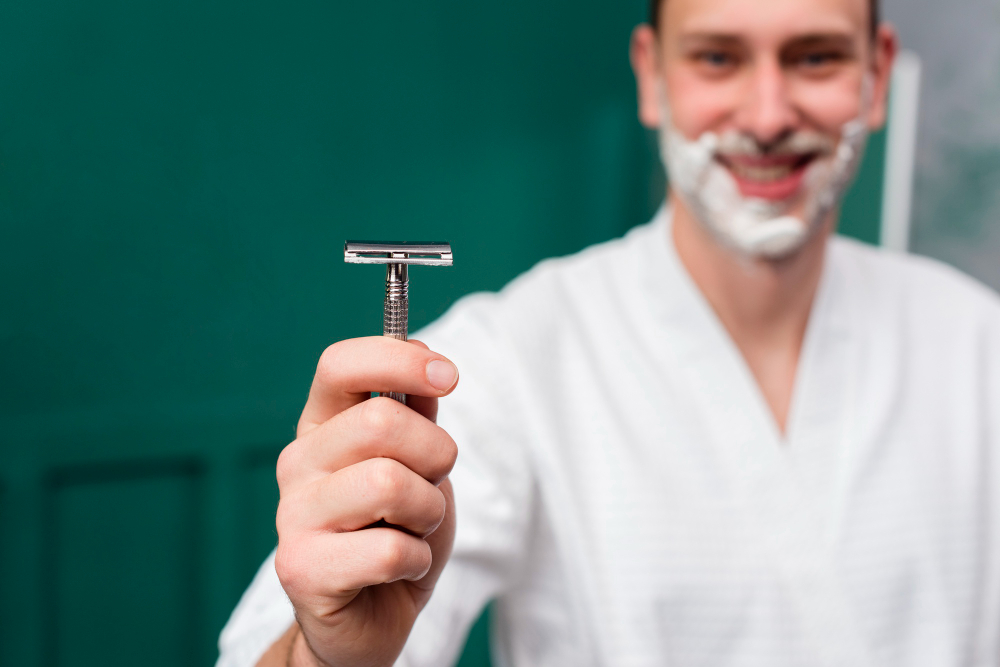
When it comes to shaving, there’s no denying that safety is a top priority. After all, no one wants to deal with nicks, cuts, or irritation. This brings us to an essential question: Are safety razors dangerous? The short answer is no!
In fact, safety razors can provide a close and comfortable shave while minimizing the risk of skin irritation. Let’s dive into the details and explore why safety razors are a safe and effective option for your grooming routine.
A History of Safety Razors: The Safer Alternative
Once upon a time, men relied on straight razors for their daily shave. While these single-blade razors were effective, they were also time-consuming to maintain and required a steady hand to avoid cuts. Essentially, shaving with a straight razor was like taking a knife to your face—yikes!
Enter the safety razor. Invented in the early 1900s, safety razors revolutionized shaving by offering a single blade that was easy to use and, most importantly, safe. With a protective guard that helps prevent nicks and cuts, safety razors quickly became the preferred choice for shavers everywhere.
Safety Razor 101: How It Works
So, what’s the secret behind the safety razor’s safety? It’s all in the design. The head of the safety razor is bent to position the blade at the optimal angle, typically around thirty degrees, to efficiently slice through hair without tugging or pulling. The protective guard also ensures that the blade doesn’t come into direct contact with the skin, reducing the chance of cuts.
The result? A close and comfortable shave that keeps your skin happy and healthy. And because safety razors have only one blade, you’ll experience less irritation compared to multi-bladed cartridge razors, which can cause friction and ingrown hairs.
The Benefits of Shaving with a Safety Razor
Beyond the safety features, there are plenty of reasons to love safety razors. Here are just a few:
- Cost-effective: Say goodbye to overpriced cartridges! Safety razor blades are affordable and easy to replace, making them a budget-friendly choice in the long run.
- Eco-friendly: Traditional cartridge razors generate a lot of plastic waste. Safety razors, on the other hand, are reusable and durable, with recyclable metal blades.
- Precision: With a single blade and a weighted handle, safety razors offer greater control and precision for a smooth, clean shave every time.
- Reduced Irritation: Single-blade safety razors can help minimize razor burn, ingrown hairs, and skin irritation, making them a great option for those with sensitive skin.
- Classic Experience: Using a safety razor brings back the art of traditional wet shaving, offering an enjoyable and satisfying experience for many enthusiasts.
Razor Comparison: Safety vs. Cartridge vs. Straight
| Type of Razor | Safety Razor | Cartridge Razor | Straight Razor |
|---|---|---|---|
| Blades | Single blade | Multiple blades | Single blade |
| Safety Guard | Yes | Yes | No |
| Cost | Economical | Expensive | Varies |
| Maintenance | Low | Low | High |
| Skill Level | Moderate | Easy | Advanced |
| Eco-friendly | Yes | No | Yes |
| Irritation | Low | Moderate | Low |
As you can see, safety razors strike a balance between the simplicity of cartridge razors and the traditional appeal of straight razors, while also providing cost and environmental benefits.
Tips for Safe Shaving with a Safety Razor
If you’re new to safety razors, here are some tips to ensure a safe and enjoyable experience:
- Use a light touch: Let the weight of the razor do the work—no need to press hard.
- Shave with the grain: Shaving in the direction of hair growth helps reduce irritation. For an even closer shave, you can follow with a second pass across the grain.
- Change blades regularly: A dull blade can lead to tugging and discomfort. Replace the blade after every few shaves for the best results.
- Prep your skin: Soften your facial hair by taking a warm shower or applying a hot towel to your face before shaving. Use a quality shaving cream or soap to create a protective lather.
- Rinse and moisturize: Rinse your face with cold water to close the pores, and apply a soothing aftershave or moisturizer to keep your skin hydrated and refreshed.
Final Thoughts
Safety razors are a safe and effective option for achieving the perfect shave. With a careful design, numerous benefits, and some simple tips, you can enjoy a close and comfortable shave with peace of mind. So, go ahead and give safety razors a try—you might just find your new favorite grooming tool!
*Disclaimer: Individual experiences with shaving may vary. As with any sharp object, always exercise caution and use proper technique when shaving with a safety razor.
Last update on 2024-04-26 / Affiliate links / Images from Amazon Product Advertising API
Affiliate Disclosure: This post contains affiliate links, which means I may receive a small commission, at no extra cost to you, if you make a purchase using these links.

Jay Kang
Just because i'm asian does not mean I don't need shaving. I always wanted to grow a beard when I was young, now I need to shave because hair growth for me is a problem. I'm going through what every man will and has gone through before.