Do you ever wonder why your barber uses baby powder during a haircut? It’s not just for show. It serves an important purpose.
The use of talcum powder by barbers has been around for many centuries, but only recently has it become a popular choice for styling hair. Talcum powder is a fine, soft mineral powder created from talc, a mineral composed mainly of magnesium, silicon, and oxygen.
It is used in many industries due to its absorbent properties, making it ideal for barbers who wish to control the scalp’s moisture.
This article will provide an overview of the history of talcum powder, why it is used by barbers, the types of talcum powder available, and safety precautions when using it.
History of Talcum Powder
Talcum powder has a long and storied history. It dates back to ancient times when Romans and Greeks used it to absorb moisture from sweat and skin oils.
Talc was also commonly used in the 19th century to keep powdered hair looking neat. In the 20th century, talcum powder was popularly used after shaving by barbers and men at home, as it was believed to help reduce irritations caused by razor burn.
Today, talc is still widely used in many of the same ways due to its highly absorbent properties. While its popularity has waned in recent years due to safety concerns, many people still find that talcum powder is a good part of their grooming routine.
Why do Barbers use Talcum Powder?
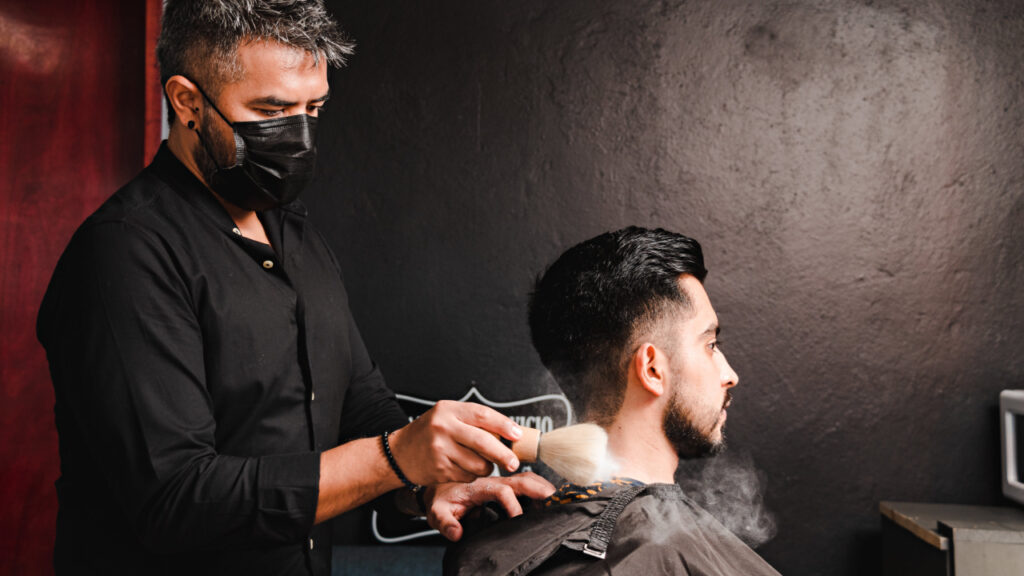
Barbers have long used talcum powder to give the customer a pleasant experience. It helps reduce friction and moisture, which are both issues that can arise after a haircut. Talcum powder is also beneficial for its ability to soothe red, irritated skin and help prevent itchiness from occurring.
The powder can also add a classic barbershop smell, and it’s even said that Pinaud talc has been used since the 1930s in US barber shops for this purpose. Talcum powder is typically applied to the neck and face as the last step in a shave.
While it’s best to use talcum powder with caution, its softness allows it to absorb residual moisture without creating a chemical reaction on the skin.
Benefits of Using Talcum Powder
Barbers have used talcum powder for centuries, and with good reason. The benefits of using talcum powder are numerous.
As mentioned earlier, talcum powder helps absorb moisture and skin oils, calming irritations and reducing friction to prevent rashes and bumps.
It also helps keep skin dry and prevents the problem from reoccurring. Talcum powder can help reduce the pain associated with waxing and act as a dry shampoo to keep hair and scalp healthy.
Furthermore, talc has a classic barbershop smell that can provide a pleasant aroma to the shop. All these benefits make talcum powder an essential tool for barbers that should not be overlooked.
Types of Talcum Powder
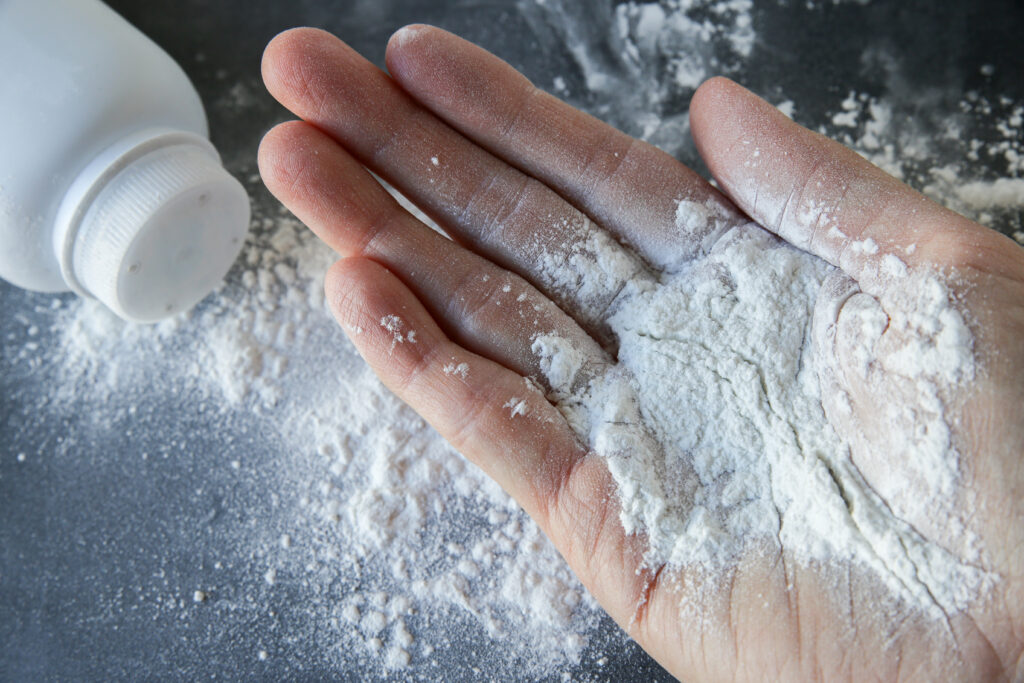
Barbers use different types of talcum powder to achieve desired results. Depending on the powder type, it can reduce friction, absorb moisture, and even help stop infection.
Baby powder is one of the most popular types used, as it has a classic barbershop smell and is soft enough not to generate a chemical reaction when used on the skin.
Hair styling powders are also popular, as they are made with silica, which helps create friction and makes styling easier.
Cornstarch can also be used as an alternative, as it works well on hair clippings. For the finest quality powder, barbers often use talc, which is made of magnesium, silicon, and oxygen.
Talc absorbs moisture and helps keep skin dry while preventing chafing and other moisture-related issues. No matter which type of talcum powder is used, it can provide added comfort after haircuts that are especially beneficial around the neck area.
Alternatives to Talcum Powder
For those who are looking for an alternative to talcum powder, there are several options available.
Baby powder is a popular choice, as it is likely a cheaper alternative and one you can reach for if you have sensitive skin.
Another option is a blend of baking soda and cornstarch, designed to help control moisture and keep the skin irritation-free all day.
Additionally, dry shampoo is another viable option for those who want to avoid traditional talc.
Whatever alternative you choose, read the safety precautions before use, and always patch test first!
How to Apply Talcum Powder
Applying talcum powder is a simple process that can be done in just a few steps.
- First, the barber should ensure that the talcum powder has a fine, dry consistency.
- Next, the barber should gently sprinkle the powder onto the customer’s neck or any area of the skin where friction may occur. The barber should then brush away any excess powder using a soft brush.
- Finally, the barber should massage the powder into the skin to ensure even coverage. This enables the talc to absorb moisture from the skin and reduce friction.
With just a few simple steps, talcum powder can comfort and relieve customers after a haircut or shave.
Safety Precautions for Using Talcum Powder
Taking safety precautions when using talcum powder is important, as contamination with asbestos has been linked to some mesothelioma cases.
It is recommended to use talc-free products and avoids inhaling the powder.
Additionally, it is important not to apply talcum powder directly to the skin, as the skin may absorb the particles. Rather, it is best to use a cloth or paper towel and lightly dab the powder onto the skin.
Finally, people should also check product labels to ensure they do not contain any talc.
By following these precautions, people can enjoy the benefits of talcum powder while minimizing any potential risks.
Conclusion
In conclusion, barbers have used talcum powder for more than 200 years. It is used to absorb moisture and finish the shaving process. Talcum powder offers several benefits, including calming irritations and keeping skin dry and comfortable.
It can also be used as an alternative to aftershave. However, there are safety concerns when using talcum powder as it has been linked to asbestos contamination and mesothelioma. For this reason, it is important to use talcum powder with caution and always follow safety precautions.
Last update on 2024-04-25 / Affiliate links / Images from Amazon Product Advertising API
Affiliate Disclosure: This post contains affiliate links, which means I may receive a small commission, at no extra cost to you, if you make a purchase using these links.

Jay Kang
Just because i'm asian does not mean I don't need shaving. I always wanted to grow a beard when I was young, now I need to shave because hair growth for me is a problem. I'm going through what every man will and has gone through before.