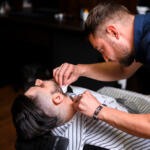

A barbershop can open on eight thousand dollars, or on two hundred thousand, and both figures answer the same question honestly. What splits them apart is not the neighborhood or a lucky lease. It is one decision made before a single chair gets bolted to the floor: whether the barbers working there rent their own station and bring their own tools, insurance, and client list, or whether the shop hires them, pays a wage or commission, and carries the overhead itself. Settle that question first, and the rest of the budget mostly falls into place on its own.
Booth Rental vs Commission, the Decision That Sets the Real Number
Most first time owners picture a barbershop as one business with one price tag. It is really two different businesses that happen to share a floor plan, and the gap between them is almost the entire startup budget.
Booth Rental for Barbers Who Already Have Clients
Under a booth rental setup, each barber pays a flat fee for the chair rather than splitting every ticket with the shop. That fee typically runs $200 to $1,500 a month depending on the market and what comes with the station, though plenty of shops still quote it by the week, commonly $200 to $225. The renter supplies their own clippers, blades, chair side product, and liability coverage, and owes self employment tax, 15.3 percent, on whatever they bring in. The payoff for the owner is real: payroll barely enters the opening budget at all, since the people cutting hair are tenants, not employees.
A Wage or Commission Instead
A commission shop works the other way. The barber takes a cut, usually somewhere between 40 and 70 percent depending on seniority and how much of their own clientele they bring through the door, and the shop covers rent, utilities, product, and insurance out of its half. That arrangement costs more from day one. Four barbers working thirty hours a week can run $12,000 or more a month in wages before a single other bill arrives. What it buys in return is control, consistent quality, and a business that still has value if one barber quits and takes their scissors elsewhere.

What the Shop Costs Before a Single Cut
Strip out payroll and the one time costs of simply getting the doors open are fairly consistent whichever staffing model gets chosen later. For a lean shop moving into existing retail space, the whole package typically lands between $8,000 and $25,000.
- Licensing and permit fees: $100 to $1,000, covering the business registration and shop license rather than any individual’s barber license.
- Equipment: $5,000 to $15,000 for chairs, clippers, and mirrors, scaling with the number of stations.
- Furniture and decor: $2,000 to $10,000.
- Opening inventory: $650 to $1,500 for the shaving creams, aftershave, and styling product that get sold or used in the first weeks.
A commission shop with a full build out, several stations, a waiting area, and a team’s first month or two of payroll already banked pushes that same range toward $25,000 to $200,000. Nothing about a booth rental shop forces that ceiling. It is the staffing model, not the barbershop itself, that decides which end a given owner lands on.

The Monthly Bills That Start the Day the Doors Open
Rent sets the pace for everything else. A commonly cited benchmark runs around $4,000 a month for roughly 1,500 square feet, though a two or three chair shop in a smaller space can sit well under that, and a prime corner lease in a dense city can run well past it.
- Utilities: $300 to $800.
- Insurance: $400 to $700.
- Booking software and point of sale: $40 to $150.
- Cleaning and sanitation supplies: $50 to $200.
- Marketing: $50 to $500.
None of that includes payroll. Add a commission team back in and the realistic monthly range for a staffed shop climbs to somewhere between $15,000 and $40,000, most of it wages. A booth rental shop skips nearly all of that number, since the renters are covering their own supplies and insurance out of what they already pay in station fees.


The License Is the Cheap Part, the Shop’s Own Approval Is What Catches Owners Off Guard
Every barber actually cutting or shaving in the building needs their own state barber license before anything else, and anyone not yet holding one should start there rather than with a lease. The fee itself is small. The real cost sits in the training hours behind it, and that number genuinely changes by state, covered in full in our guide to getting a barber license, with the earlier steps toward becoming a licensed barber covered separately for anyone starting from zero.
What a lot of new owners miss is that the shop itself usually needs separate sign off from the state barber or cosmetology board, on top of every barber’s personal license. That inspection checks running water, ventilation, and a disinfection setup for tools and surfaces, and it has to pass before the doors open, not after. Federal rules add one more wrinkle specific to this trade. OSHA’s bloodborne pathogens standard only applies once an employer can reasonably expect staff to come into contact with blood on the job, and the agency has stated outright that a single rare nick does not trigger it on its own. A shop built around straight razor shaves, where that contact is a normal part of the service rather than a freak accident, is the kind of workplace the standard is actually written for, and it calls for a written exposure control plan rather than a verbal understanding that everyone washes their hands.

Which Model Actually Fits a First Shop
An already licensed barber with an existing client base and a low appetite for risk should start with booth rental. It keeps the opening number near the low end of the one time range, skips the commission payroll bill entirely, and lets the shop grow one rented chair at a time. Anyone building a team and a brand meant to outlast any single barber’s book of clients needs commission instead, even though it costs more on day one and every month after. That higher cost is what turns the shop into something worth owning on its own, rather than a room full of tenants who could leave tomorrow. Owners who have settled on the commission route and want the full operational walkthrough, from the business plan through hiring staff, can find the step by step process of opening a barbershop covered separately.
Last update on 2026-11-03 / Affiliate links / Images from Amazon Product Advertising API
Affiliate Disclosure: This post contains affiliate links, which means I may receive a small commission, at no extra cost to you, if you make a purchase using these links.

Jay Kang
Just because i'm asian does not mean I don't need shaving. I always wanted to grow a beard when I was young, now I need to shave because hair growth for me is a problem. I'm going through what every man will and has gone through before.