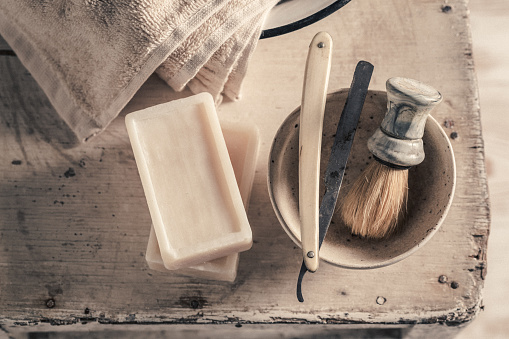
Are you curious about what goes into making a high-quality shaving soap? Whether you’re an avid wet shaver or just looking to try something new, understanding the ingredients in shaving soap can help you choose the perfect product for your needs.
In this blog post, we’ll discuss the different types of ingredients that go into making a great shaving soap.
Essential Ingredient in Soap Making Process
High-quality shaving creams also contain stearic acid and other ingredients such as aqua, myristic acid, potassium hydroxide, coconut oil, olive oil, soy wax, and natural aloe vera gel. These ingredients help create a creamy lather rich in fat and glycerin content. You can make the perfect shaving soap for any skin type or preference with the right combination of ingredients.
1. Base Oils
Base oils are the foundation of a quality shaving soap. The most commonly used base oils are coconut oil, palm oil, safflower oil, and soy wax. These oils provide the essential fatty acids and glycerin necessary for a rich, creamy lather.
30 Percent Coconut Oil
30 percent coconut oil is an essential ingredient in shaving soap. This oil provides a rich, bubbly lather and helps create a luxurious feel when mixed with other oils like olive, almond, and coconut oil.
Traditional shaving soaps often require a higher level of solid oils, such as coconut oil, to create the desired consistency.
For example, a traditional shaving soap recipe may use 30% coconut oil mixed with 30% olive oil and 30% palm oil. Coconut oil is also an important part of the soap-making process as it helps increase the fat and glycerin content in the soap.
Additionally, high-quality shaving creams often include coconut oil as their main ingredient.
Natural Aloe Vera Gel
Natural Aloe Vera gel is a key ingredient in many shaving soaps, often soothing and moisturizing. It is extracted from the pulp of the aloe vera plant grown primarily in the Mediterranean region and is rich in essential vitamins and minerals.
This gel provides a protective layer to the skin while helping retain moisture and reduce irritation, making it an ideal choice for sensitive skin. It is also known to have anti-inflammatory properties that help to reduce redness and inflammation caused by shaving.
Additionally, Natural Aloe Vera gel can help improve the soap’s lather, creating a thick and luxurious foam that provides an incredibly close shave.
Soy Wax
Soy wax is a key ingredient in the soap-making process and provides a great base for the oils used in shaving soap.
It is comprised of fatty acids, which create a rich lather and add stability to the soap. Glycerin content within the wax helps maintain moisture balance in the skin, making it an essential ingredient for high-quality shaving cream.
2. Fat & Glycerin Content
The best shaving soap contains high fat (vegetable or grease) and glycerin. Glycerin, ideally, should make up 30 percent of the total weight of the soap and acts as a ‘humectant’ or water binder, keeping the soap from becoming too dry.
Tallow is one of the most common and popular ingredients found in shaving soap. Taken from animals, tallow is an animal fat composed mainly of stearic acid, which is a naturally occurring fatty acid found in many animal and vegetable fats.
Glycerin is produced from breaking the fatty acid to form soap molecules. The relative proportion of glycerin to fat determines how soft, or hard the shaving soap will be.
3. Potassium Hydroxide
Potassium hydroxide, or KOH, is a key ingredient in soap-making and is commonly used in traditional, solid shaving soaps. It helps to create a softer soap that lathers faster than bar soap. KOH is also used in high-end shaving creams, mixed with other oils such as coconut, shea, and cocoa, to give the product a unique feel and texture.
The lye content helps to soften the skin while providing an effective lather. Along with other base oils and fats, KOH helps provide the glycerin content needed for a high-quality shaving cream that won’t dry out your face.
4. Stearic Acid
Stearic Acid is a fatty acid found in abundance in many vegetable oils, such as palm oil, and is an essential ingredient in shaving soap. It is a surface-active agent that helps create lather and also aids in the stability of the lather. It also helps bring moisture and lubrication to the skin during shaving. Stearic Acid helps provide a nice creamy lather that is able to trap and hold water close to the skin.
5. Myristic Acid
Myristic Acid is a fatty acid found in nutmeg, palm oil, coconut oil, butter fat, and spermaceti (the oil from the sperm whale). It’s used in shaving soaps and creams to give them a thick, rich, velvety texture. It also helps to make the product more durable and longer-lasting.
Myristic Acid is often combined with other base oils, such as Palmitic Acid and Stearic Acid, to create a more effective shaving soap. Together these ingredients work to provide a superior shave that leaves skin feeling smooth and moisturized.
Conclusion
Generally, shaving creams commonly consist of an emulsion of oils, soaps or surfactants, and water. The best shaving soap contains high fat (vegetable or grease) and glycerin. Stearic acid creates the stable lather, slickness, and softening qualities necessary in a shave soap.
In addition to soap and lather, traditional, solid shaving soaps include base oils (like 30 percent coconut oil and soy wax) and essential ingredients like potassium hydroxide (a natural alkali used in the soap-making process) and Natural Aloe Vera gel for slickness.
Last update on 2024-04-19 / Affiliate links / Images from Amazon Product Advertising API
Affiliate Disclosure: This post contains affiliate links, which means I may receive a small commission, at no extra cost to you, if you make a purchase using these links.

Jay Kang
Just because i'm asian does not mean I don't need shaving. I always wanted to grow a beard when I was young, now I need to shave because hair growth for me is a problem. I'm going through what every man will and has gone through before.