
A day or two after a clean shave, the same patch of skin turns sandpapery. That prickly stage is not a shaving mistake, and it is not a sign your razor did a bad job. It is what a cut hair looks and feels like before it grows long enough to bend again, and this article breaks down what actually causes it, how long it realistically sticks around, and which parts of your routine can make it milder instead of worse.
Table Of Contents
−What Actually Makes Regrowth Feel Prickly
Every hair on your face or body tapers to a fine point on its own, long before a razor ever touches it. Shaving cuts straight across that taper and leaves a flat, sharp edge instead. Dr. Taylor Bullock, a dermatology resident at Cleveland Clinic, explains that a hair cut short has more resistance to bending than the same hair’s original tapered end did, and the uneven edge left by the cut is what registers as a poke against a fingertip or a collar. The same flat cut also explains why shaved hair looks thicker for the first few days, you are seeing the wider base of the shaft instead of the thin tip you shaved off. Neither effect means your hair actually changed. The follicle underneath never felt the blade.
How Long the Rough Stage Actually Lasts
There is no fixed number of days, since the timeline depends on how fast your hair grows and how coarse it is to start with. Fine, straight hair usually softens back up within three or four days, once it has grown past the stiff, cut end and has enough length to flex again. Coarse or curly hair, the kind more prone to curving back into the follicle in the first place, can stay rigid closer to a week. More frequent shaving does not shorten this window. It just resets the clock on a fresh patch of hair every time you do it.
What Actually Makes It Milder
Nothing skips the rough few days entirely, but three habits change how sharp it feels while it lasts.
Give the Blade Less to Tear Through
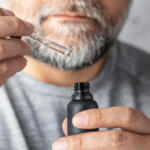
A razor moving through softened, lubricated hair cuts closer to that flat edge cleanly. A blade dragging through dry or under-lathered hair tends to tug and fray the tip instead of slicing it. A frayed tip is rougher than an ordinary flat one, so the two or three days after a rushed, dry shave usually feel worse than the same stretch after a shave with real lather or a pre-shave oil that lets the blade glide instead of dragging. Direction matters too. Cutting against the grain adds resistance the blade has to fight through, which is why choosing with the grain, across the grain, or against the grain on purpose leaves a cleaner edge than forcing one direction on hair that will not cooperate.
Keep the Surface From Snagging Dead Skin
Skin sheds constantly, and when dead cells build up around a follicle opening, a stiff regrowing hair has to push past them instead of sliding out clean, which adds friction on top of the hair’s own stiffness. Light exfoliation two or three times a week, not daily, clears that buildup without irritating skin that is already dealing with fresh cuts underneath. An exfoliating scrub aimed at the beard area does this job without the extra pressure a washcloth or a rough loofah adds on top.
Calm the Skin Instead of Fighting the Hair
Dry skin exaggerates every one of these sensations. The same stiff hair feels sharper crossing tight, flaky skin than it does crossing skin that is actually hydrated. A plain, fragrance-light moisturizer applied while skin is still slightly damp does more for the prickly feeling than anything marketed specifically at stubble, because it treats the skin’s side of the friction, not the hair’s.
What Makes It Worse
A few habits that sound like fixes actually extend the rough stretch instead of shortening it. Baking soda scrubs show up in a lot of home remedy lists for this exact complaint, and they are a mistake. Dallas dermatologist Dr. Elizabeth Houshmand puts the chemistry plainly, skin’s own acid mantle sits around pH 4.5 to 5.5, while baking soda runs close to pH 9. Scrubbing that onto skin already dealing with fresh cuts disrupts the barrier and trades a few prickly days for redness and dryness that lasts longer. Picking at or tweezing a hair that has not fully grown out does similar damage, and it raises the odds of the hair breaking off jagged below the surface instead of clearing normally. Tight collars, waistbands, or workout gear rubbing over freshly shaved skin will not change how the hair itself feels, but repeated friction on top of it is what turns ordinary prickliness into actual irritation.
When It Stops Being Ordinary Prickliness
Plain regrowth roughness fades on its own and does not come with redness, swelling, or bumps that outlast the hair itself. If what you are dealing with is a cluster of inflamed bumps rather than an even, sandpaper feel, or the irritation keeps getting worse instead of settling down after a few days, that is razor burn or a razor bump forming, not the normal cut-tip effect this article covers, and it calls for a different response.
The prickly stretch after a shave is not something any product removes entirely. It is a normal few days built into how a razor works. What you can actually control is how rough those days feel, a clean cut from a lubricated blade moving with the grain, a light exfoliating routine that keeps the surface clear, and real moisturizer on the skin underneath. Get those three right and the sandpaper stage shrinks from a week to three or four days instead of vanishing, which is the most any shave, on any part of the body, is ever going to manage.
Last update on 2026-10-14 / Affiliate links / Images from Amazon Product Advertising API
Affiliate Disclosure: This post contains affiliate links, which means I may receive a small commission, at no extra cost to you, if you make a purchase using these links.

Jay Kang
Just because i'm asian does not mean I don't need shaving. I always wanted to grow a beard when I was young, now I need to shave because hair growth for me is a problem. I'm going through what every man will and has gone through before.