

If you get razor bumps, the razor you use matters more than the cream, the aftershave, or the price you paid. Bumps happen when a hair is cut so short and so sharp that it curls back and grows into the skin, and most modern cartridges are built to cut exactly that way. The fix is a tool that cuts at the skin’s surface instead of below it.
Table Of Contents
−- Best razors for razor bumps at a glance
- Why some razors cause bumps and others do not
- The best razors for razor bumps, and who each one is for
- Bevel Safety Razor, best overall for coarse or curly hair
- Henson AL13, best for sensitive skin that also nicks
- Leaf Shave Twig, best single blade for cartridge switchers
- Gillette SkinGuard, best cartridge for bump-prone skin
- BIC Sensitive Single Blade, best budget option
- Philips Norelco OneBlade 360, best for severe bumps
- Philips Norelco 3600, best electric for razor bumps
- How to choose a razor for your bumps
- Technique that keeps bumps away, whatever razor you use
- Frequently asked questions
- Which razor to buy for razor bumps
So we sorted these picks by hair type and by how bad your bumps are, not by brand. Coarse, curly hair that bumps every time needs a different tool than straight hair that only bumps on the neck. Find yourself in the table, then read that pick. If you are not sure the problem is bumps rather than burn, our guide on telling razor bumps from razor burn will settle it in a minute.
Best razors for razor bumps at a glance
| Razor | Best for | Why it helps |
|---|---|---|
| Bevel Safety Razor | Coarse, curly hair with frequent bumps | One blade, mild head, heavy enough to need no pressure |
| Henson AL13 | Sensitive skin that also nicks easily | Blade supported almost to the edge, so it cannot flex into skin |
| Leaf Shave Twig | Cartridge users who want one blade without learning a new angle | Fixed head set at a cartridge-like angle, mild exposure |
| Gillette SkinGuard | Men who want to stay with cartridges | Guard bar between two blades so hair is cut at skin level |
| BIC Sensitive Single Blade | Tight budget, travel, testing the idea | One blade in a cheap disposable |
| Philips Norelco OneBlade 360 | Severe bumps, darker skin prone to dark marks | Trims near skin level, never below it |
| Philips Norelco 3600 | Men who want a true electric shave | Rotary heads that cut just above skin level |
Why some razors cause bumps and others do not
The medical name for chronic razor bumps is pseudofolliculitis barbae, and it is a mechanical problem before it is a skin problem.
A multi-blade cartridge works by having the first blade grab and pull the hair up while the next blades cut it. When the hair snaps back, its tip sits slightly below the skin. A curly hair that ends below the surface, with a fresh sharp tip, is the hair most likely to curve around and pierce the skin again. That is the bump. Our breakdown of what extra blades actually do to your skin covers the mechanism in more detail.
This is why the American Academy of Dermatology lists a single-blade razor or an electric razor as the usual recommendation for men prone to bumps, and why its razor bump guidance for darker skin tones tells men to avoid shaving too closely. Every pick below follows one of those two routes. The safety razors and the BIC use a single blade. The Gillette SkinGuard keeps two blades but stops the lift. The two Philips tools cut above the skin line.
The best razors for razor bumps, and who each one is for
We start with the single-blade options, since that is where most bump-prone men should look first, then move to the cartridge and electric choices for readers who need them.
Bevel Safety Razor, best overall for coarse or curly hair
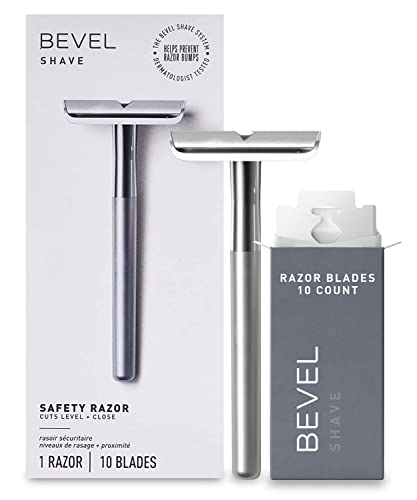
Bevel was built for men with coarse, curly beards, which is the group pseudofolliculitis barbae hits hardest. It is a three-piece double edge razor with a solid safety bar and a mild head, so it cuts each hair once at the surface and leaves it there. No lift, no hair tucked under the skin.
The brass-weighted handle matters as much as the head. A heavy razor cuts with its own weight, and pressing down is one of the fastest ways to irritate bump-prone skin. The handle is smooth, though, and owners say it gets slippery with wet hands, so take your time on the neck. It takes any standard double edge blade, and our list of the best double edge razor blades sorts them by skin type.
Good for
- Coarse or curly beards that bump after every cartridge shave
- Men with darker skin who also deal with dark marks
- First-time safety razor users, since the head is mild
Skip it if
- You want a textured, grippy handle
Henson AL13, best for sensitive skin that also nicks

Some bump-prone men give up on safety razors because they keep cutting themselves. The Henson fixes that. Its head supports the blade almost to the cutting edge, which keeps the edge rigid, so it cannot flex into the skin on the chin and jawline. Henson sets the blade at a 30 degree shaving angle, which makes the angle easier to find than on most double edge razors.
It is machined from aluminum, so it is light. That is the tradeoff against the Bevel. You have to keep a light touch on purpose, because the razor will not do it for you. If you shave against the grain out of habit, a Henson makes that habit feel safe, but bump-prone skin still does better shaving with the grain.
Good for
- Sensitive skin that reddens and bumps
- Men who nick themselves often with other safety razors
- Travel, since aluminum has no plating to chip
Skip it if
- You want a heavy razor that cuts with its own weight
Leaf Shave Twig, best single blade for cartridge switchers
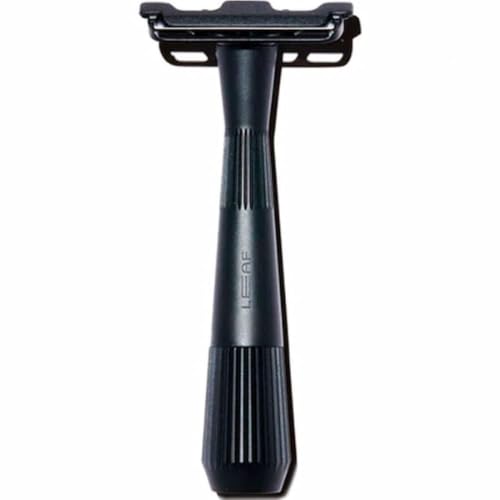
The hardest part of moving to a safety razor is the angle. The Twig removes most of it. It is a single-edge razor with a fixed head set at an angle close to a cartridge, so you hold it the way you already hold a Gillette and still get one blade cutting at the surface. Leaf describes the Twig as the mild version, meant for lighter hair or sensitive skin.
It is all metal, backweighted to guide strokes without extra pressure, and loads with a magnetic assist, so you are not handling a loose blade over the sink. The narrow single-edge head also gets under the nose and around the corners of the mouth better than most double edge razors.
Good for
- Cartridge users who want one blade without relearning how to shave
- Light to medium beards on sensitive skin
- Detail work around the mouth and nose
Skip it if
- You have a very thick, dense beard, since the mild head needs extra passes
Gillette SkinGuard, best cartridge for bump-prone skin
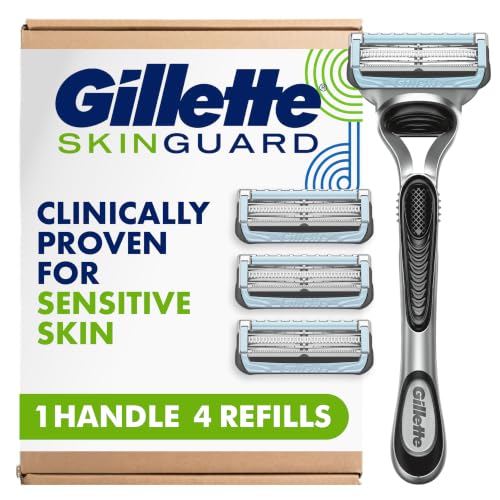
Not everyone wants a safety razor, and that is fine. The SkinGuard is the cartridge to buy if you are staying with cartridges. Gillette puts a guard bar between its two blades that stops the first blade from lifting the hair, so the hair is cut at skin level instead of below it. That directly targets the mechanism that causes bumps.
It is cheap, easy to find, and needs no learning curve. The tradeoff is ongoing cost, since you keep buying cartridges, and a dull cartridge brings the bumps back. Change it as soon as it starts to tug.
Good for
- Men who want the fix without switching tools
- Mild bumps mostly on the neck
- Shared bathrooms where a loose blade is a problem
Skip it if
- Your bumps are severe, since a single blade or the OneBlade will do more
BIC Sensitive Single Blade, best budget option

If you want to find out whether one blade fixes your bumps before spending fifty dollars, start here. The BIC Sensitive is a single-blade disposable sold in large packs, so it costs very little per shave. One blade means no lift and no hair cut below the surface.
It is light and plastic, with none of the weight that makes a safety razor so easy on the skin, and the blade dulls faster than a good double edge blade. The American Academy of Dermatology notes that a dull blade raises the risk of bumps, so throw each one out after a few shaves rather than stretching it.
Good for
- A cheap test of whether a single blade helps you
- Travel and gym bags
- A cheap backup
Skip it if
- You want the gentlest possible shave every day
Philips Norelco OneBlade 360, best for severe bumps
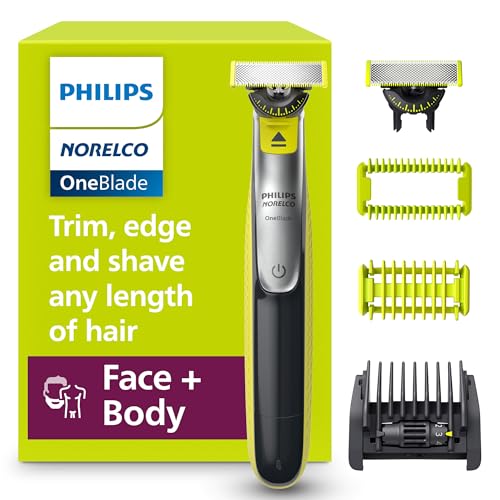
When bumps are severe, the most reliable fix is to stop cutting the hair right at the skin at all. The OneBlade is a hybrid trimmer and shaver with a fast-moving cutter behind a guard with rounded tips. It leaves a clean, near-shaven finish but does not cut below the skin line, which is exactly what the AAD’s advice to avoid shaving too closely is getting at.
Its 1 to 5 mm comb lets you leave a very short stubble on the neck while the bumps settle down, and the separate body blade covers manscaping without nicks. Philips says each blade lasts up to four months. The finish is not blade smooth. For men whose skin breaks out after every close shave, that is a trade worth making.
Good for
- Severe, recurring bumps on coarse or curly hair
- Darker skin prone to dark marks after shaving
- Men happy with a close-cropped look
Skip it if
- You need a blade-smooth finish for work
Philips Norelco 3600, best electric for razor bumps

If you want a real electric shave rather than a trimmer, the 3600 is a sensible place to start. It is a rotary shaver with self-sharpening blades, and Philips designs it to cut just above skin level. That leaves the hair tip at the surface, where it is far less likely to grow back in.
It works wet or dry, the heads pivot to follow the jaw, and it costs less than most premium shavers. Use it with light pressure and go slowly on the neck, because rotary heads can irritate when pressed hard. If you want to compare it with other electrics, our guide to choosing between an electric razor and a safety razor for sensitive skin covers when each one wins.
Good for
- Men who want an electric shave that stays off the skin line
- Sensitive skin on a budget
- Quick daily shaves
Skip it if
- Your beard is very thick and coarse, since it needs extra passes
How to choose a razor for your bumps
Three questions decide which of these is right for you. Brand and finish come a distant fourth.
How coarse and curly your hair is
Tightly curled, coarse hair is the most likely to grow back in, so it benefits most from cutting above the skin or with one blade. Straighter hair that bumps mainly on the neck often does fine with a SkinGuard or a mild single blade. If your hair grows in several directions on the neck, take that into account, and our guide to choosing a shaving direction by hair type shows how to map it.
How bad your bumps are right now
Mild, occasional bumps usually clear up with a better razor and better technique. Bumps after every single shave, or bumps that leave dark marks, call for the gentler end of this list, the OneBlade or a mild safety razor used with the grain. If you have bumps right now, our guide on what to put on a razor bump covers how to calm them before your next shave, and our piece on how long razor bumps last tells you how long to wait.
Whether you will learn a new razor
A safety razor takes a couple of weeks to learn. If you will put in that time, the Bevel or Henson gives the best long-term result for the lowest running cost. If you will not, the Twig, the SkinGuard, or a Philips tool gets you most of the benefit with no learning curve. Our full beginner walkthrough for a safety razor covers the angle, the passes, and the prep.
Match the razor to your situation
Here is the short version, by reader.
- Coarse, curly hair, bumps after every shave: Bevel Safety Razor
- Sensitive skin that also nicks: Henson AL13
- Want one blade, keep the cartridge feel: Leaf Shave Twig
- Want to keep using cartridges: Gillette SkinGuard
- Severe bumps or dark marks: Philips Norelco OneBlade 360
Technique that keeps bumps away, whatever razor you use
The right razor removes the main cause, but technique decides whether the bumps actually stop. These steps come straight from AAD guidance and the way bumps form.
- Shave with the grain. The AAD tells men prone to bumps to shave slowly in the direction the hair grows. Against the grain cuts closer, and closer is the problem.
- Do not stretch the skin. Tight, stretched skin lets the blade cut deeper, and the hair retracts below the surface when you let go.
- Use a moisturizing shaving cream. Soft, lubricated hair cuts cleanly with less tug. A pre-shave oil helps on coarse hair.
- Change blades often. A dull blade tugs and raises bump risk. For a double edge razor that means every five to seven shaves, which our guide on how often to change a safety razor blade explains.
- Skip harsh aftershaves. Alcohol-heavy splashes sting freshly shaved skin. Our list of the best aftershave for men sorts options by skin type.
For the full prevention routine, including what to do in the days after a shave, see our guide on how to prevent razor bumps by hair and skin type.
Frequently asked questions
These are the questions men ask most once they have decided their razor is the problem.
Do single-blade razors really stop razor bumps?
For many men, they cut bumps down sharply, because one blade cuts the hair once at the surface without lifting it. They are not a cure on their own. You still need to shave with the grain and keep the blade sharp. Our look at whether single-blade razors are better for sensitive skin covers the evidence.
Is an electric razor or a safety razor better for bumps?
Both are on the AAD’s list. Electric tools that stay off the skin line, like the OneBlade and the 3600, are the safer bet for severe bumps because they never cut close. A mild safety razor gives a smoother finish and suits men whose bumps are moderate.
How long until my bumps stop after switching razors?
The bumps you already have need time to clear, often a few weeks, because the hairs already trapped have to grow out. Give a new razor and better technique about a month before you judge it. If bumps are painful, filled with pus, or leaving scars, see a dermatologist.
Can I keep using my multi-blade cartridge if I change my technique?
You can, and shaving with the grain will help. For bump-prone hair, though, the cartridge’s lift and cut action is the core problem, so technique alone rarely fixes it. The SkinGuard is the cartridge to try if you want to stay with one.
Which razor to buy for razor bumps
Pick by how bad your bumps are. If they show up after most shaves and your hair is coarse or curly, buy the Bevel and shave with the grain. If they show up after every shave or leave dark marks, buy the OneBlade 360 and stop chasing a blade-close finish until your skin settles.
Last update on 2026-11-04 / Affiliate links / Images from Amazon Product Advertising API
Affiliate Disclosure: This post contains affiliate links, which means I may receive a small commission, at no extra cost to you, if you make a purchase using these links.

Jay Kang
Just because i'm asian does not mean I don't need shaving. I always wanted to grow a beard when I was young, now I need to shave because hair growth for me is a problem. I'm going through what every man will and has gone through before.


