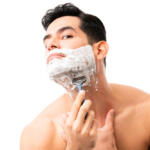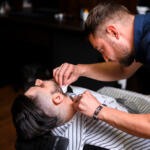

A barbershop straight razor shave and shaving at home solve two different problems, not one problem two different ways. The real question is not which one gives the better shave in the abstract. It is whether your hair type, your budget, and how often you actually want this done point toward paying someone else to do it or handling it yourself. The cost math and the skin science both give a clear answer once you know your own situation, and neither one matches what most comparison pages tell you.
What a Barbershop Straight Razor Shave Actually Costs
Price is the first number most readers want, and it moves more than generic buying guides suggest.
A traditional straight razor shave at a barbershop runs $30 to $65 in most markets. A longer luxury version with extra hot towels and a facial massage can run $55 to $120. The service itself takes 30 to 45 minutes from the first hot towel to the final splash of aftershave, and it is built around a fairly standard sequence: consultation, hot towel, pre-shave oil, lather, two passes with the blade, a cool towel, then aftershave. That is not a five minute morning routine, and most regulars do not treat it like one. Roughly a third book every three to four weeks alongside a haircut. A quarter book monthly as a standalone service. The rest show up mainly for a wedding, an interview, or some other occasion where the extra polish matters more than the schedule.
What Shaving at Home Actually Costs
Home shaving carries almost no marketing behind it, so the real numbers rarely get repeated anywhere.
A double edge blade for a safety razor costs a few cents and gets five to seven clean shaves before it needs swapping. Blade and soap included, that puts a home safety razor shave at roughly $0.24. A cartridge system lands closer to $0.67 a shave once you count how often the heads actually get replaced. Neither number sounds like much on its own. Multiply either one by how often you actually shave and the gap turns real fast, something like $500 saved over five years switching from cartridges to a safety razor at five shaves a week, with the razor and a brush paying for their own upfront cost in about six months.
| Option | Cost per shave | Time per shave |
|---|---|---|
| Barbershop straight razor | $30 to $65 (up to $120 for a luxury service) | 30 to 45 minutes |
| Home safety razor | About $0.24 | 5 to 10 minutes once technique settles |
| Home cartridge razor | About $0.67 | 3 to 5 minutes |
Put those numbers side by side and the two options stop looking like real competitors. One barbershop shave a month costs about what a full year of home shaving does. That is not an argument against the barbershop. It just means the two are not really substitutes for each other unless you are only shaving a handful of times a month either way.
The Ingrown Hair Risk Barbershop Marketing Never Mentions
Cost is the easy comparison. Skin risk is the one most comparison pages skip past entirely, and it matters most for coarse or curly hair.
DermNet’s clinical overview of pseudofolliculitis barbae, the razor bump condition, is specific about what raises the risk. A close shave, a pass against the grain, and going back over the same patch more than once all sharpen the angle of a cut hair’s tip, and a sharper tip is more likely to curl back into the follicle instead of growing straight out. Coarse or curly hair is the texture most prone to that curling in the first place.
A classic straight razor shave is built around that exact sequence. The standard barbershop routine runs two full passes with the blade, one with the grain and a second against it, specifically to get closer than a single pass would. That second pass is real skill in a trained barber’s hands, the same guard-free control that lets a straight razor cut flush with the skin at all, covered in more depth in our safety razor versus straight razor comparison. Skill changes how cleanly the blade travels across your skin. It does not change the angle of the cut tip once that blade goes against the grain, and that angle is the actual mechanism DermNet describes as the main driver of a bump.
None of that means skip the barbershop if you deal with razor bumps. It means say so before the barber picks up the blade. Ask for a single pass with the grain instead of the full two-pass routine, and treat the days after a barbershop shave the same way you would after a home shave, since what actually decides whether a cut hair curls back in plays out over the days that follow, not during the appointment itself.
When a Barbershop Shave Is Genuinely the Right Call
None of the math above is an argument against ever booking one. Some situations line up with it clearly.
- A wedding, interview, or event where the polish matters more than the price for one day.
- Wanting to try a straight razor shave before spending $80 or more on a razor and a strop to learn one at home.
- No real interest in learning blade angle control, and enough budget to treat the shave as an occasional service rather than a daily habit.
- Coarse or curly hair, but comfortable asking the barber for a single pass with the grain instead of the standard two-pass routine.
When Shaving at Home Is the Better Fit
The reverse situations point just as clearly the other way.
- Shaving more than once a week, where the per-shave cost gap actually adds up.
- A tight grooming budget, since the upfront cost of a decent safety razor and brush is often less than two barbershop visits.
- Coarse or curly hair prone to bumps, which benefits more from the same gentle, single-pass technique applied every single day than from an occasional appointment.
- Wanting full control over pass direction and pressure rather than trusting it to whoever is holding the blade that day.
For that daily routine, a safety razor with a mild blade gap and a solid guard bar is the direct answer. Its fixed guard already limits how close a single pass can get, which is the same restraint a barbershop’s second, against-the-grain pass skips on purpose to chase extra closeness. If you are switching over from cartridges or from barbershop visits, a full beginner walkthrough on shaving with a safety razor covers the angle, pass order, and pressure habits that decide whether your first few weeks go smoothly.
The Actual Answer
If you shave once a month or less and want the full experience along with the shave, book the barbershop, and just ask for a single pass if bumps have ever been a recurring problem for you. If you shave several times a week, especially with coarse or curly hair, a home safety razor routine costs a fraction as much and gives you the one thing a barbershop appointment cannot: the same gentle, consistent technique applied every single day, not just the day you happened to have a reservation.
Last update on 2026-11-04 / Affiliate links / Images from Amazon Product Advertising API
Affiliate Disclosure: This post contains affiliate links, which means I may receive a small commission, at no extra cost to you, if you make a purchase using these links.

Jay Kang
Just because i'm asian does not mean I don't need shaving. I always wanted to grow a beard when I was young, now I need to shave because hair growth for me is a problem. I'm going through what every man will and has gone through before.